

The journey of ‘11 volte Cornaredo’ continues with another chapter of international scope, bringing to mind one of the most fascinating encounters the Club experienced in the 1990s. The fourth episode of the video miniseries is dedicated to the two-legged tie against Real Madrid in the 1993/94 Cup Winners’ Cup, which came about following the 1993 Swiss Cup victory – a milestone that had brought the Bianconeri back onto the European stage.
Leading that Lugano side from the bench was Karl Engel, who is interviewed in this new episode to reflect on one of the most significant moments of his time with the bianconeri. In his words, the journey of those years represented the fruit of the growth the Club had built up over time: a team that had become more mature, more solid and capable of earning its place on the continental stage through merit. In this sense, European participation was not seen as an isolated episode, but as the natural outcome of work that had already shown significant promise in previous seasons.
Before facing Real Madrid, Lugano had overcome FK Neman Grodno, a little-known Belarusian side, with a convincing 5-0 victory in the first leg. Engel recalls that match as a very positive response from his squad, who were called upon to secure qualification straight away by demonstrating their quality.
Having beaten Neman Grodno, Lugano’s European campaign pitted the bianconeri against Real Madrid. Engel recalls an initial reaction of surprise, satisfaction and also inevitable trepidation, because facing a team of that calibre was not an everyday occurrence. At the same time, however, that two-legged tie was a source of pride: the chance to gauge the level reached by Swiss football and by Lugano against one of the most prestigious names on the international stage.
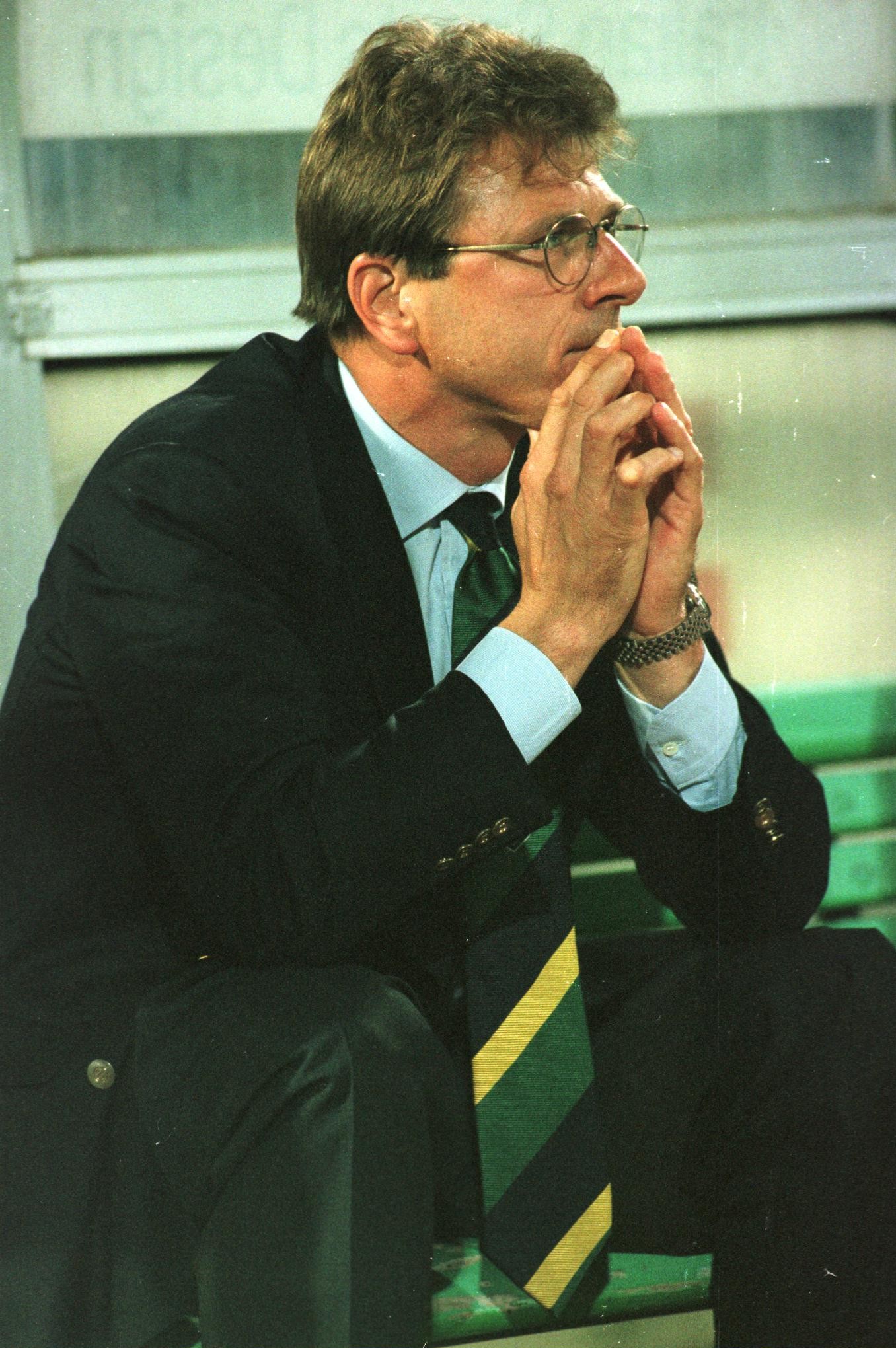
The first leg, which the Spanish side won 3–1, was not, however, played at Cornaredo. For reasons relating to UEFA approval, the match was in fact played in Zurich, in a stadium that Engel describes as cold and impersonal – a far cry from the atmosphere of closeness between team and fans that Cornaredo could have provided on such an evening. This is another reason why the memory is tinged with a touch of regret: the feeling that a match of such appeal deserved to be played in its natural home.
Facing champions of the calibre of Hierro, Zamorano and Butragueño meant Lugano were up against the very highest standard, but Engel sought from the outset to convey a clear message to his players: not to feel inferior, even whilst acknowledging the difference in quality. Even in the return leg at the Santiago Bernabéu, despite the 3-0 final score, the manager recalls a first half that was evenly matched right up until the closing minutes, before Real managed to show their true worth. Inevitably, the Spaniards’ superiority then became clear, but without diminishing the significance of that experience for the bianconeri’s journey.
In Engel’s account, this European fixture still holds a value today that goes beyond the result. On the one hand, there is the prestige of having faced one of the world’s most famous clubs; on the other, there is the realisation of having brought Lugano to a major stage thanks to the joint efforts of the team, staff and management. This is also why the bond between Engel and Cornaredo remains so strong: it was there, at the helm of Lugano, that he achieved the most significant personal success of his career, winning the Swiss Cup.
This fourth episode of ‘11 Times Cornaredo’ recounts not only a double-header against Real Madrid, but also a period in which the club had managed to build solid foundations, rediscover ambition and establish itself with credibility even beyond Switzerland’s borders. In his final farewell to Cornaredo, Engel entrusts the stadium with the memory of profound emotions, whilst acknowledging that every story, at some point, must inevitably make way for a new one.
The fourth episode of ‘11 volte Cornaredo’ is available from today.